
Ending violence
Five steps to take after sexual violence
By Idara ya Uchapishaji · DiA's · 15 October 2026 · 1 min read
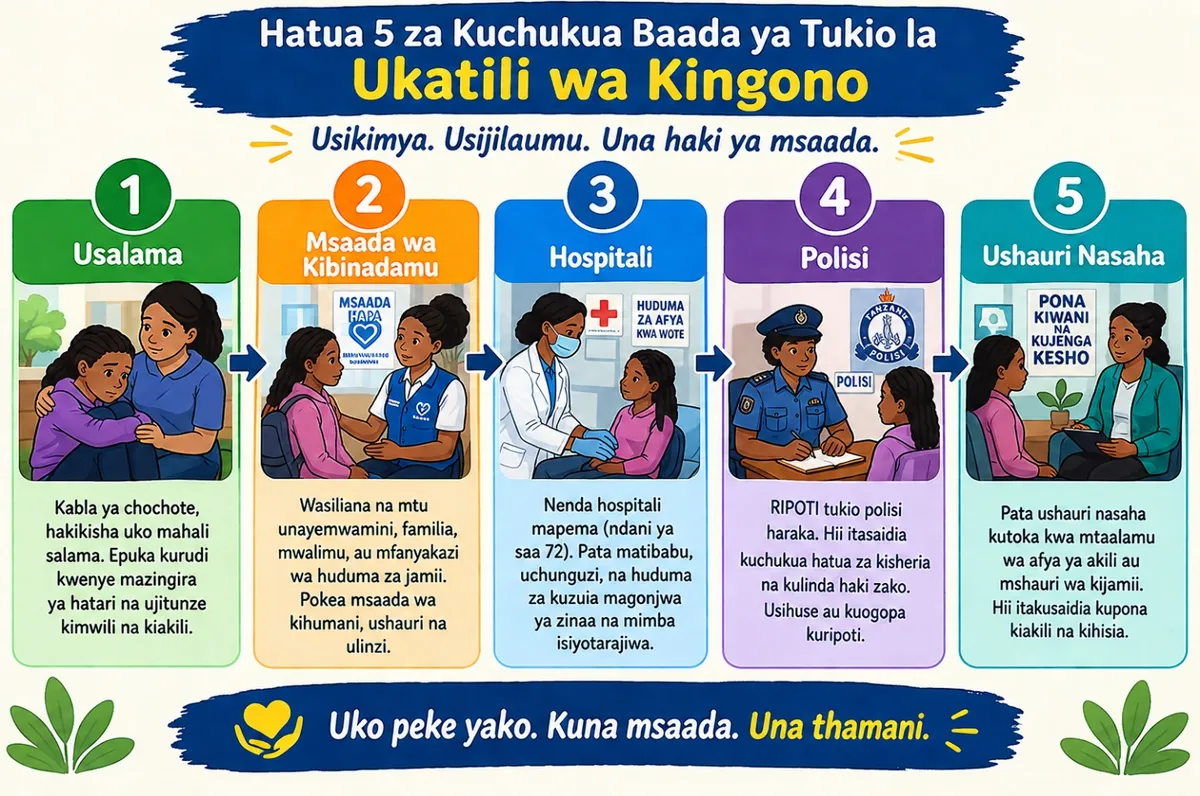
Do not stay silent. Do not blame yourself. You have the right to help. These five steps can protect a survivor's health, life and right to justice.
No one deserves to be abused, and the fault always lies with the perpetrator, never the survivor. If you or someone you know has experienced sexual violence, these steps matter.
1. Safety
Get away from danger immediately, if you can, and go somewhere safe.
2. Tell someone you trust
A parent, teacher, religious leader or relative. You should not carry this alone.
3. Go to a hospital quickly
Within 72 hours (three days) for examination, treatment and emergency medicine to prevent HIV infection and unwanted pregnancy. If possible, do not bathe or change clothes before getting medical help, so that evidence is not lost.
4. Report to the police
At the Gender and Children's Desk found at many police stations, or call the child helpline 116 (free, 24 hours). The PF3 form is used to obtain treatment and record medical evidence.
5. Counselling
Get psychological support through Social Welfare, a school counsellor or civil society organisations. Healing is a journey, and no one should walk it alone.
If you are a friend or witness
Listen without judging, reassure them it is not their fault, help them reach professional support, and do not share their story without consent. Numbers and services may change; confirm them at your nearest police station or hospital.